Home › Software› Singapore Payment App Fees Face Scrutiny as Merchants Push Back
SoftwareSingapore Payment App Fees Face Scrutiny as Merchants Push Back
Jordan Ellis
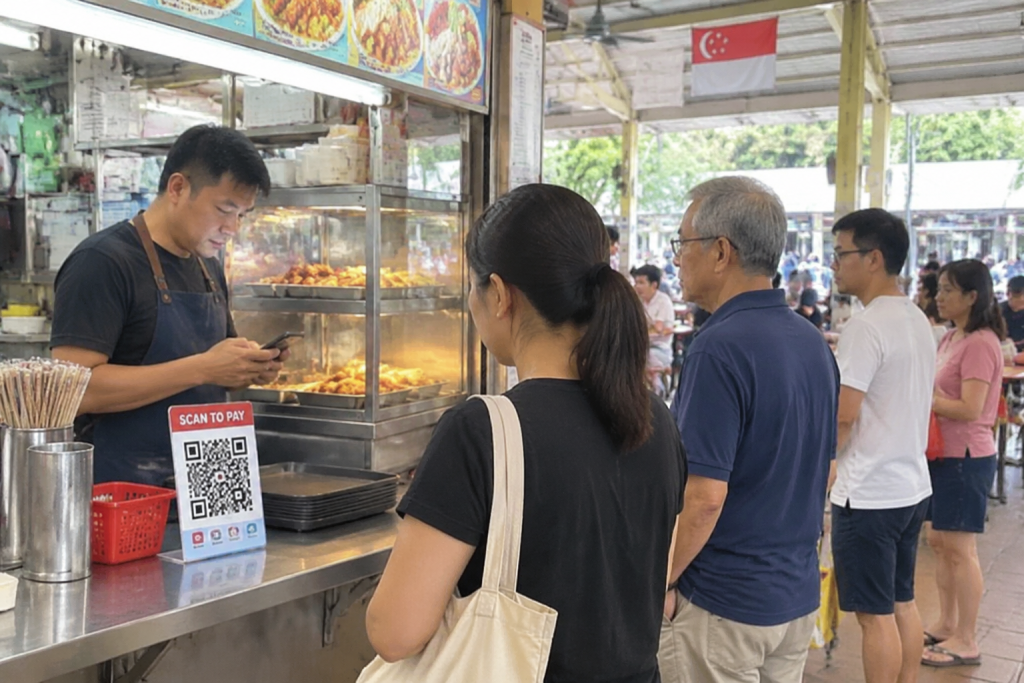
A new report from the Singapore Merchants Association highlights growing concerns among small businesses over opaque and rising fees charged by payment app providers, with some merchants threatening to revert to cash-only transactions.
A report released on Tuesday by the Singapore Merchants Association (SMA) has put the spotlight on the fees charged by payment app providers, revealing that many small and medium-sized enterprises (SMEs) are struggling with what they describe as opaque and escalating costs. The report, titled Cost of Convenience, surveyed merchants across the island and found that a significant majority are concerned about the impact of transaction fees on their margins.
At a bustling hawker centre in Chinatown, stall owner Mr. Lim, who has been selling fishball noodles for over two decades, said he started accepting mobile payments to cater to younger customers but now feels the fees are eating into his profits. “Every time a customer pays with an app, a slice goes to the platform,” he said. “It adds up, especially for low-value transactions.” Similar sentiments were echoed by retailers in heartland malls, where QR code payments have become ubiquitous but the cost of acceptance remains a sore point.
The report notes that while payment apps have streamlined transactions and reduced cash handling, the fee structures—often a percentage of each transaction plus a fixed fee—can be particularly burdensome for businesses with thin margins. Some merchants have started displaying signs encouraging cash or direct bank transfers to avoid fees, a trend that could undermine Singapore’s push towards a cashless society. The SMA is urging payment providers to offer more transparent pricing and tiered fee structures for small businesses.
“We recognise the convenience that digital payments bring, but the current fee models are not sustainable for many heartland businesses,” said Mr. K. Shanmugam, president of the Singapore Merchants Association. “We are not asking for a free ride, but we need fairness and clarity. Merchants should be able to understand exactly what they are paying for and have options that suit their scale.” A spokesperson for the Monetary Authority of Singapore (MAS) said the regulator is aware of the concerns and is working with industry players to ensure a competitive and transparent payments landscape. “We encourage merchants to review their payment contracts and explore alternatives,” the spokesperson added.
The SMA plans to submit a formal proposal to MAS and payment providers by the end of the quarter, recommending a standardised fee disclosure framework and a review of the fixed fees for small-ticket transactions. Meanwhile, several payment apps have indicated willingness to engage with merchants. An industry dialogue session is expected to be scheduled next month, bringing together providers, merchant groups, and regulators to discuss possible adjustments. As Singapore continues its smart nation journey, balancing innovation with affordability will be key to ensuring no business is left behind.
The report also highlighted a disparity in bargaining power. Larger chains often negotiate custom rates with payment providers, while smaller merchants are left with standard take-it-or-leave-it contracts. For a hawker selling a S$4 bowl of noodles, a 1 per cent fee plus a 10-cent fixed charge can wipe out a significant portion of the profit on each transaction. The SMA survey found that nearly 70 per cent of respondents were unaware of the full breakdown of fees until they reviewed their statements closely, and many said they felt locked into contracts with little room to switch.
Payment providers, for their part, argue that the fees cover the cost of secure infrastructure, fraud protection, and customer support. One industry executive, speaking on condition of anonymity, said that maintaining a reliable network across Singapore requires substantial investment and that fee structures are often designed to incentivise volume. Still, the executive acknowledged that smaller merchants may need more tailored options and that the upcoming dialogue session would be a chance to address those concerns directly.
Merchants like Mr. Lim remain cautious. He said he would prefer a simple flat fee per transaction rather than a percentage that grows with the size of the bill, as it would make it easier to budget. “I just want to know what I am paying and why,” he said. “If the fees keep going up, I might have to go back to cash only, even if that means losing some customers.” The SMA’s proposal is expected to be closely watched by both the industry and regulators, as Singapore seeks to maintain its position as a regional fintech hub while ensuring that the transition to digital payments does not leave small businesses behind.
Read next

Hardware
Data Centre Operators Confront Power Crunch as AI Loads Surge in Singapore
Singapore's data centre operators are turning to liquid cooling and on-site generation as AI workloads push power density

AI
Banks Rethink Model Hosting as AI Workloads Strain On-Premise Infrastructure
Financial institutions are shifting from on-premise AI model hosting to hybrid architectures, balancing latency, data sovereignty, and cost

Security
Enterprise Ransomware Defense Shifts to Identity-First Playbooks as Attackers Target Credentials
Enterprise ransomware defense is shifting from perimeter controls to identity-first playbooks as attackers increasingly use stolen credentials to